
Loading...

ATLAS


one shared

memory
at any scale

atomic dsm at large scale

scalable

elastic

distributed

unified

strongly consistent

Self-organising

overview

ATLAS is a Post-Doctoral research project carried out by Dr. Andria Trigeorgi at Algolysis Ltd, in collaboration with the University of Cyprus, and funded by the Research and Innovation Foundation under the POST-DOC programme. 

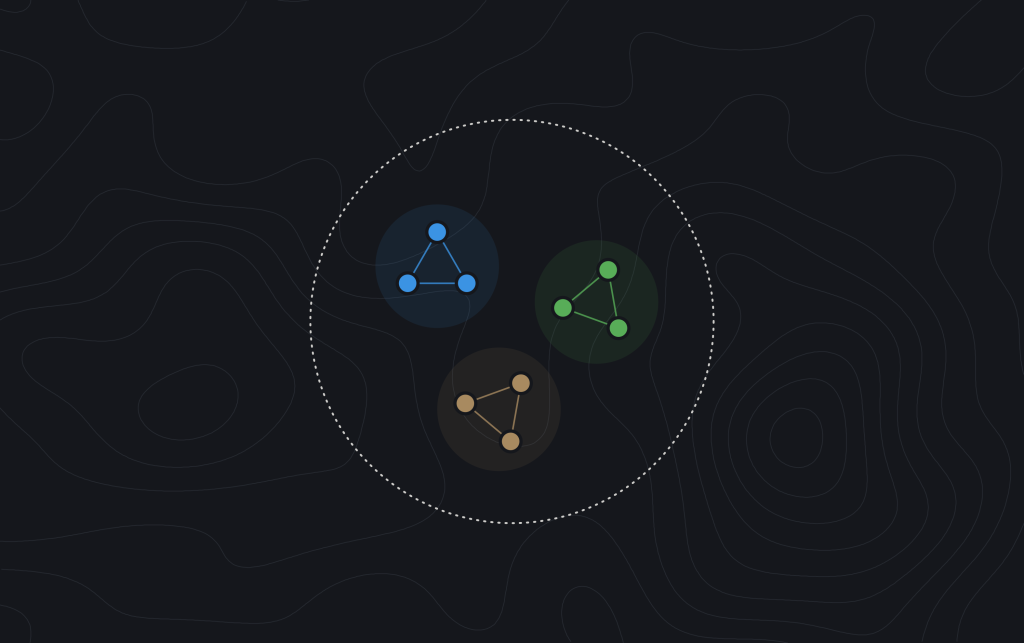
The project develops a scalable, strongly consistent shared memory service. It combines multiple Distributed Shared Memory (DSM) instances into a single Unified DSM (uDSM) that grows, shrinks and reorganises automatically, while applications keep a simple read/write interface. 

ATLAS builds on the results of the previous project MaRS, which developed latency-efficient algorithms for atomic DSM and a web platform for deploying and managing DSM services. 


Motivation

The growth of data, increasingly complex computing problems and the move towards decentralised services and Web3.0 have made distributed applications more important than ever. Spreading work across many networked devices brings better performance, fault tolerance and scalability. However, building applications across devices that differ in hardware, operating system and network capability is still difficult. 

A Distributed Shared Memory (DSM) hides this complexity. It gives developers the illusion of a single, consistent memory shared by all nodes, much like the memory of a regular computer. Atomic DSM goes further by guaranteeing that every read returns the most recent value, even when many users access the same data at once. 

Existing DSM solutions, however, rely on a single monolithic instance. Its capacity is limited by the smallest participating node, and its performance drops as more nodes and users join. This limitation has kept atomic DSM from wide practical use. ATLAS addresses it by turning DSM into a modular, self-organising service that can scale up and down on demand. 

our focus

ATLAS in Theory:

New decentralised algorithms for clustering nodes, placing and migrating data objects, and reconfiguring the service, all with formal guarantees of atomicity, consistency and liveness. 

ATLAS in Practice:

A working multi-instance DSM service, evaluated on a real testbed and integrated into the existing web platform developed in MaRS for real-time monitoring and management. 

Main Outcomes

.

Scalable Unified DSM

A strongly consistent shared memory that combines multiple DSM instances into a single, unified memory service. 

.

Clustering, Placement & Migration

Decentralised algorithms specifying how nodes are grouped into DSM instances, where each data object is stored, and when and how to reorganise and migrate data without interrupting the service.

.

Web Platform for Memory Administration

An extended web platform for monitoring DSM instances, nodes and data objects in real time, and for automatically adding new nodes to the service. 

project objectives

OBJECTIVE 01: Design Decentralised Clustering and Data Placement Algorithms

Study clustering approaches (DHT-based, ML-based and topology-aware) and design decentralised algorithms that group nodes into DSM instances and assign each data object to the right instance. Formally prove the atomicity, consistency and liveness of the resulting Unified DSM (uDSM). 

Objective O2: Design Dynamic Clustering and Data Migration Algorithms

Design methods that detect changes in the system, such as nodes joining, leaving or failing, and decide when reclustering is needed. Then reorganise the clusters, move data between instances without interrupting active operations, and safely remove DSM instances that are no longer needed. 

Objective O3: Implement, Integrate and Evaluate

Implement the algorithms and integrate them into the Memory Management Module to create a working uDSM. Deploy it on a real testbed and compare its performance (latency, throughput, capacity) and scalability against a single-instance DSM. 

Objective O4: Develop and Integrate the ATLAS Web Platform

Extend the DSM web platform developed in MaRS to support a uDSM. Provide real-time monitoring of instances, nodes and data, automatic provisioning of new nodes, and visualisations of system statistics, and evaluate the platform through usability studies. 

Latest News

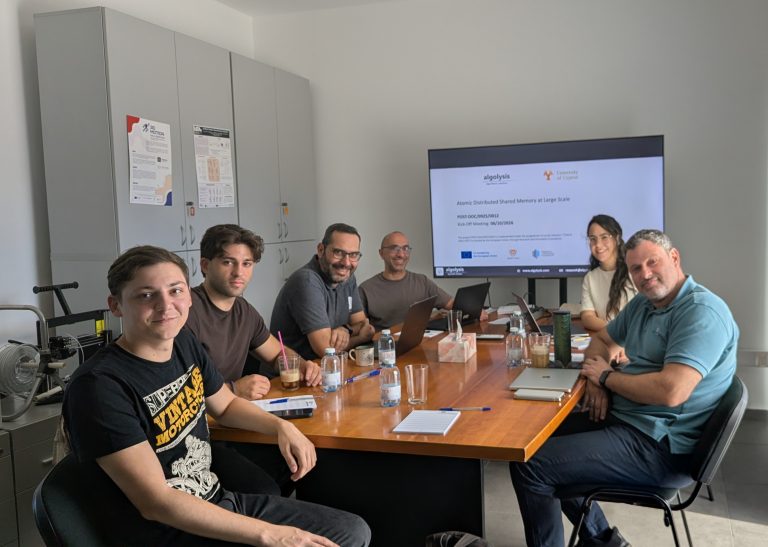
Kick-Off Meeting

Kick-Off Meeting: The kick-off meeting of the project ATLAS took place at the premises of Algolysis Ltd on the 6th...